
Gambling exists in every corner of the world, but the way people play and what they prefer changes dramatically from one culture to another. What draws crowds to casinos in Macau differs greatly from what fills gambling halls in Las Vegas or London. These differences go far beyond simple game choices and reveal deep cultural values about risk, social interaction, and entertainment.
Cultural beliefs, religious backgrounds, and social norms shape how people gamble, which games they choose, and even how they behave at gaming tables. Asian cultures often favor group-oriented games like baccarat and mahjong, while Western players typically gravitate toward individual games like slots and poker. The reasons behind these preferences connect to broader cultural ideas about luck, skill, and social relationships.
Understanding these global gambling patterns helps explain why certain games dominate specific regions and how casinos adapt their offerings to match local tastes. From the superstitions that guide betting decisions to the laws that restrict or encourage gambling, cultural factors influence every aspect of the casino experience across different countries and continents.

Global Overview of Gambling Preferences
Gambling preferences vary dramatically across continents, with Asian markets favoring skill-based games while Western players prefer slot machines and table games. The shift toward online platforms has accelerated globally, though cultural attitudes toward digital versus physical gambling spaces remain distinct.
Key Casino Games by Region
Asia dominates with games emphasizing strategy and skill. Baccarat leads in popularity across China, Singapore, and Macau. Pai Gow and Mahjong variations attract millions of players who value games requiring decision-making.
Sic Bo and Dragon Tiger represent traditional dice and card games that remain culturally significant. Many Asian players believe these games offer better control over outcomes compared to pure chance games.
Europe shows strong preferences for roulette and blackjack. French and European roulette variants originated here and maintain loyal followings. Poker tournaments draw substantial participation across the UK, Germany, and France.
North America leads in slot machine popularity. These games account for over 70% of casino revenue in Las Vegas and Atlantic City. Video poker and progressive jackpot slots attract players seeking large payouts.
Latin America embraces lottery-style games alongside traditional casino offerings. Bingo halls remain popular social gathering spaces in many countries.
Online vs. Land-Based Gambling Trends
Online gambling has grown rapidly in regions with favorable regulations. European markets like the UK and Malta lead in online casino adoption. Players appreciate convenience and game variety from home.
Mobile gaming dominates in Asia. Countries like Japan and South Korea show high smartphone gambling usage rates. Apps designed for quick play sessions fit busy urban lifestyles.
Land-based casinos maintain strong positions in tourist destinations. Las Vegas, Monaco, and Macau continue attracting visitors seeking entertainment experiences beyond gambling.
Cultural factors influence platform choice. Older generations often prefer physical casinos for social interaction. Younger players gravitate toward online platforms for accessibility and game selection.
Historical Influences on Gambling Habits
Ancient traditions shape modern preferences. Chinese gambling culture dates back thousands of years, creating deep acceptance of games involving luck and fortune. These beliefs influence game selection and betting patterns today.
Religious backgrounds significantly impact gambling acceptance. Islamic nations maintain strict prohibitions, while Buddhist cultures show more tolerance for games of chance. Christian regions display varying attitudes based on denominational teachings.
Colonial influences spread European-style gambling to former territories. British card games remain popular in India and Australia. Spanish lottery systems influenced Latin American gambling preferences.
Government policies historically shaped legal gambling development. Nevada’s early casino legalization created the Las Vegas model copied worldwide. Recent online gambling legislation continues reshaping global markets.
Cultural Attitudes Toward Gambling
Societies around the world hold vastly different views on gambling, ranging from complete acceptance to moral condemnation. These attitudes stem from religious beliefs, historical experiences, and deeply rooted social values that shape how people view risk-taking and games of chance.
Social Acceptance and Stigma
Social acceptance of gambling varies dramatically between cultures. In many Western countries like Australia and the United Kingdom, gambling is widely viewed as normal entertainment.
People in these societies often see casino visits and sports betting as regular leisure activities. The stigma around gambling remains minimal for casual players.
Asian cultures present a more complex picture. Countries like Macau and Singapore have embraced gambling as economic drivers. Yet traditional values in China and Japan create mixed feelings about gambling behavior.
Some cultures associate gambling with social problems. Nordic countries like Norway maintain strict attitudes despite legal gambling options. Many residents view excessive gambling as a personal failing rather than entertainment.
Community-focused societies often show less acceptance of individual gambling. These cultures prioritize collective well-being over personal risk-taking. Family reputation concerns can create strong social pressure against gambling participation.
The internet has changed social attitudes in many regions. Online gambling allows private participation without public judgment. This shift has reduced stigma in traditionally conservative areas.
Religious and Ethical Perspectives
Religious teachings heavily influence gambling attitudes across cultures. Islam strictly prohibits all forms of gambling through Sharia law. Muslim-majority countries like Saudi Arabia and Iran ban gambling entirely.
Christianity shows varied approaches to gambling. Catholic countries like Italy and Spain generally accept gambling with some restrictions. Many Protestant denominations view gambling as morally questionable.
Buddhism and Hinduism discourage gambling through teachings about attachment and suffering. However, some Buddhist countries like Thailand have underground gambling cultures despite official restrictions.
Jewish perspectives on gambling remain divided. Orthodox communities often discourage gambling while Reformed Judaism takes more liberal stances. Israel permits some forms of gambling despite religious concerns.
Ethical frameworks beyond religion also shape attitudes. Utilitarian societies focus on gambling’s social costs and benefits. Countries like Sweden emphasize responsible gambling through strict regulations.
Some cultures view gambling as exploiting human weakness. These societies implement strong consumer protections and addiction services. Others see gambling as personal choice requiring minimal intervention.
Generational Differences
Younger generations typically show greater acceptance of gambling across most cultures. Digital natives embrace online betting and mobile casino games more readily than older adults.
Millennials and Gen Z view gambling as entertainment similar to video games. They often participate in fantasy sports and esports betting without traditional gambling stigma.
Older generations in many cultures maintain stronger reservations about gambling. They often associate gambling with addiction and financial ruin based on historical experiences.
Cultural transmission patterns affect these differences. In families where gambling is normalized, younger members continue these behaviors. Conservative families tend to pass down anti-gambling attitudes.
Economic factors also influence generational views. Younger people facing economic uncertainty may view gambling as opportunity rather than risk. Older adults with established wealth often see gambling as unnecessary risk.
Technology has accelerated generational divides. Older adults struggle with online gambling platforms while younger users find them intuitive. This creates different participation patterns across age groups.
Popular Casino Games Around the World
Different regions have developed strong preferences for specific casino games based on their cultural traditions and social habits. Mahjong dominates Asian markets, while poker leads in North America and roulette remains popular across European casinos.
Asia-Pacific Casino Favorites
Baccarat ranks as the most popular table game across Asia-Pacific casinos. Players in Macau generate over 80% of casino revenue from baccarat alone. The game’s simple rules and cultural beliefs about luck make it appealing to Asian gamblers.
Mahjong remains deeply embedded in Chinese gambling culture. Traditional tile-based versions appear in both land-based venues and online platforms. Many casinos offer electronic mahjong tables to attract local players.
Sic Bo, a dice game with ancient Chinese origins, attracts players throughout the region. The game offers multiple betting options and fast-paced action. Casinos in Singapore and the Philippines feature dedicated sic bo areas.
Pachinko dominates the Japanese gambling scene despite legal restrictions on traditional casinos. These pinball-style machines generate billions in revenue annually. Players exchange winnings for prizes rather than cash to comply with local laws.
European Game Preferences
Roulette originated in France and remains the cornerstone of European casino gaming. French roulette features a single zero, giving players better odds than American versions. Monte Carlo’s famous casinos helped establish roulette’s prestigious reputation.
Blackjack attracts European players with its blend of skill and chance. British casinos call the game “Twenty-One” and follow slightly different rules. German players prefer the variant known as “Siebzehn und Vier.”
Slot machines vary significantly across European countries due to different regulations. UK fruit machines include skill-based elements and lower maximum bets. Dutch casinos limit slots to specific areas within gaming establishments.
Poker tournaments draw international players to European venues. The European Poker Tour visits major cities annually. Cash games remain popular in London, Vienna, and other gambling centers.
North American Gambling Choices
Texas Hold’em poker leads North American gambling preferences. The World Series of Poker in Las Vegas attracts thousands of players yearly. Online poker sites have expanded the game’s reach significantly.
Slot machines generate the majority of casino revenue in the United States. Las Vegas casinos feature themed slots based on movies and TV shows. Progressive jackpots can reach millions of dollars.
Craps creates excitement with its fast pace and social atmosphere. Players gather around craps tables to bet on dice rolls together. The game requires multiple dealers and complex betting options.
Blackjack appeals to players who want to use strategy. Card counting, while legal, can result in casino bans. Atlantic City and Las Vegas offer numerous blackjack variations.
South American Gambling Diversity
Bingo enjoys widespread popularity across South America, especially in Brazil. Social bingo halls serve as community gathering places. Electronic bingo terminals appear in many licensed establishments.
Lottery-style games dominate gambling preferences in most South American countries. Traditional lotteries like Brazil’s Mega-Sena create massive jackpots. Animal lottery games remain popular in several nations.
Poker has grown rapidly throughout the region. Major tournaments now take place in Buenos Aires and São Paulo. Online platforms have increased poker’s accessibility for South American players.
Roulette attracts players in upscale casino venues. Argentine casinos feature both American and European roulette wheels. The game appeals to players seeking glamorous gambling experiences.
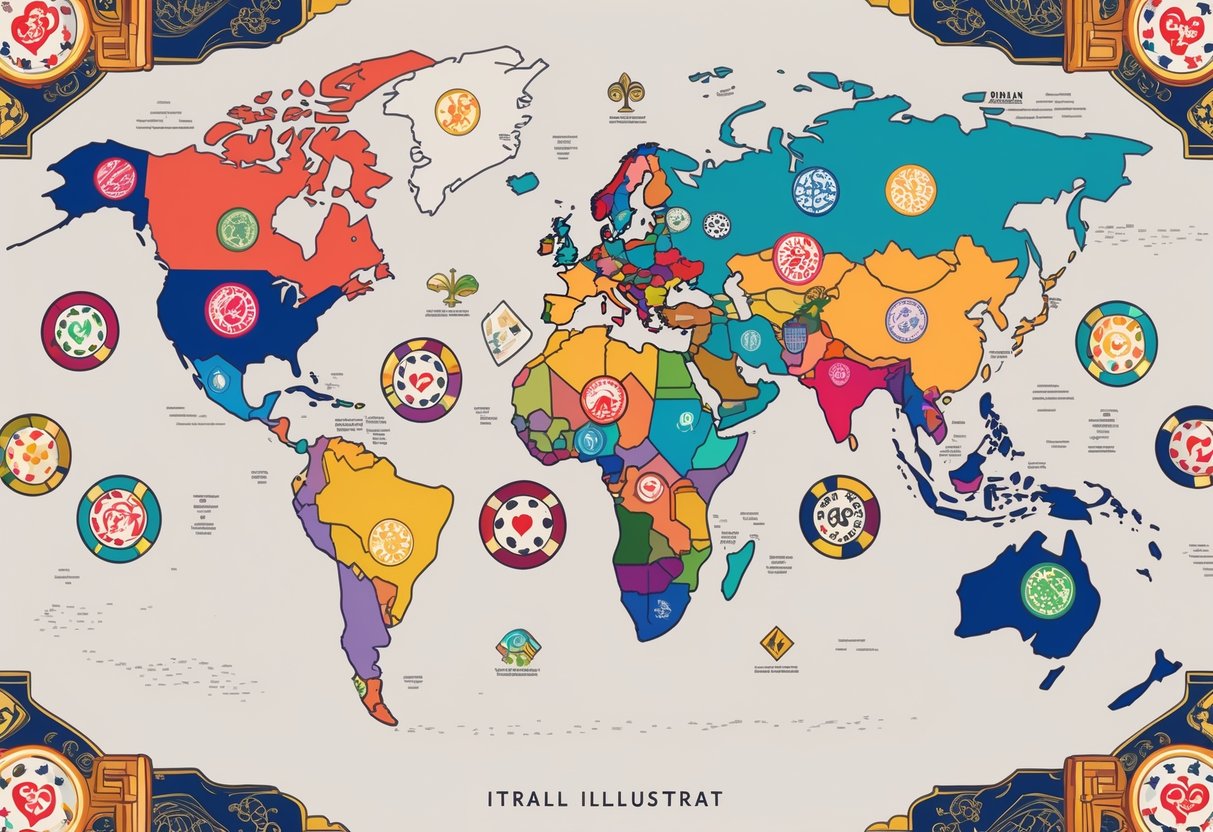
Gambling Behaviors Across Continents
Casino players around the world show distinct patterns in how they spend money, take risks, and play games. These behaviors reflect deep cultural values and social traditions that vary significantly between regions.
Spending Habits and Game Frequency
Asian gamblers typically engage in longer gaming sessions compared to Western players. They often view extended play as part of the entertainment experience.
Chinese players frequently make larger bets relative to their income. This stems from cultural beliefs about luck and fortune cycles.
European Spending Patterns:
- Moderate session lengths (2-4 hours)
- Conservative bet sizing
- Regular but infrequent visits
North American Habits:
- Shorter, more frequent sessions
- Budget-focused approach
- Entertainment spending mindset
Latin American players often gamble in groups and pool resources. They view casino visits as social events rather than individual activities.
African gambling markets show growing mobile participation. Players prefer small, frequent bets due to economic factors.
Risk Tolerance and Betting Styles
Cultural attitudes toward risk create distinct betting patterns across continents. Eastern cultures often embrace higher volatility games due to concepts of fate and destiny.
High-Risk Regions:
- Asia: Baccarat and high-stakes table games
- Middle East: Sports betting with large wagers
- Eastern Europe: Aggressive progressive slot play
Western players typically favor games with better odds and lower house edges. They research strategies and focus on skill-based options.
American gamblers prefer slots and video poker. They value entertainment features over pure gambling excitement.
Scandinavian countries show the most conservative betting styles. Players prioritize responsible gambling limits and loss prevention.
Group vs. Individual Play
Social gambling dominates in collectivist cultures across Asia and Latin America. Players often share wins and losses within their groups.
Chinese gambling culture emphasizes communal baccarat tables. Players discuss strategies and celebrate together during winning streaks.
Individual Play Preferences:
- Northern Europe
- Australia
- Canada
- United States
Mediterranean countries blend both approaches. Players start individually but form temporary social groups during play.
African gambling cultures vary by region. Urban areas favor individual online play while rural communities prefer group betting on sports.
Online platforms adapt to these preferences by offering chat features for social cultures and privacy options for individual players.
Influence of Local Laws and Regulations
Government rules and tax policies create different gambling markets around the world. Countries with strict laws push players toward illegal betting, while places with clear rules build safe casino industries.
Legal Gambling Environments
Fully Legal Markets like the United Kingdom and Australia allow most forms of gambling with strong player protections. These countries have detailed licensing systems that cover everything from slot machines to sports betting.
The UK requires all operators to follow strict rules about advertising and responsible gambling. Players can set spending limits and self-exclude from all licensed sites.
Restricted Markets such as the United States create uneven access to gambling. Some states allow full casino operations while others ban most gambling activities.
Nevada permits almost all gambling types, but Utah bans gambling completely. This creates a patchwork where people must travel to other states to gamble legally.
Prohibited Markets like China and most Middle Eastern countries ban gambling entirely. However, these strict laws often push gambling underground or to neighboring countries.
Macau exists as a special region where Chinese citizens can gamble legally, even though mainland China forbids it.
Impact of Licensing and Taxation
High Tax Rates in countries like France and Germany make online gambling expensive for operators. These costs get passed to players through lower payout rates and fewer bonus offers.
France taxes online poker revenue at 2% and sports betting at 6.3%. These rates are much higher than countries like Malta or Gibraltar.
Low Tax Jurisdictions such as Malta and Cyprus attract gambling companies with tax rates under 5%. This allows operators to offer better odds and more promotions to players.
Licensing Costs vary greatly between countries. The UK charges £15,000 for initial licenses, while some Caribbean nations charge under $1,000. These differences affect which companies can enter each market.
Role of Technology in Shaping Preferences
Technology has transformed how different cultures engage with casino gaming worldwide. Online platforms and mobile devices now allow casinos to customize experiences based on regional preferences and cultural values.
Online Gambling Platforms
Online gambling platforms use advanced technology to adapt to cultural differences across regions. These platforms analyze player data to understand local preferences and gaming habits.
Cultural Customization Features:
- Language options for specific regions
- Payment methods popular in each country
- Game themes that match local traditions
- Betting limits based on regional spending patterns
Artificial intelligence helps online casinos create personalized experiences for players from different cultures. The technology tracks which games players from specific regions prefer most.
For example, Asian players often favor games with lucky numbers and symbols. European players may prefer classic table games like roulette and blackjack.
Online platforms also adjust their marketing approaches based on cultural attitudes toward gambling. Some cultures view gambling as entertainment, while others see it as more serious.
The technology allows casinos to offer games during peak hours for different time zones. This helps match when players from various cultures are most active online.
Mobile Casino Gaming
Mobile technology has made casino gaming accessible to cultures that previously had limited access to traditional casinos. Players can now gamble using smartphones and tablets from anywhere.
Mobile Gaming Adaptations:
- Touch-screen interfaces designed for different hand sizes
- Games optimized for various internet speeds
- Battery-efficient gaming for extended play sessions
- Offline modes for areas with poor connectivity
Different cultures use mobile devices in unique ways for gambling. Some prefer quick games during commutes, while others enjoy longer gaming sessions at home.
Mobile apps can detect a player’s location and automatically adjust to local laws and regulations. This ensures compliance with gambling rules in different countries.
The technology also enables social features that appeal to various cultures. Some regions prefer competitive gameplay, while others focus on community aspects.
Mobile payment systems have made it easier for players worldwide to deposit money using local banking methods. This removes barriers that once prevented cross-cultural participation in online gambling.
Casino Design and Customer Experience
Casino operators worldwide adapt their physical spaces and service approaches to match local cultural expectations. These design choices and hospitality standards directly impact how comfortable players feel and how long they stay.
Cultural Influences on Casino Atmosphere
Asian casinos prioritize feng shui principles in their layouts. Red and gold colors dominate the design palette because these represent luck and prosperity. Many venues avoid the number 4 in room numbers and table positions since it sounds like “death” in Chinese.
Gaming floors feature circular table arrangements rather than straight lines. This promotes better energy flow according to traditional beliefs.
European casinos maintain elegant, sophisticated atmospheres. Monte Carlo and Baden-Baden showcase classical architecture with high ceilings and crystal chandeliers. Dress codes remain stricter than their American counterparts.
American casinos focus on bright lights and energetic environments. Las Vegas properties use vibrant neon displays and themed decorations. The goal is constant stimulation and excitement.
Middle Eastern venues incorporate Islamic geometric patterns in their designs. They avoid imagery that conflicts with religious values while still creating luxurious spaces.
Service Standards and Hospitality
Japanese pachinko parlors operate with minimal staff interaction. Players prefer quiet, focused environments without interruption. Staff members bow when greeting customers and speak softly.
Macau casinos employ Mandarin and Cantonese-speaking dealers. They serve traditional Chinese tea and provide lucky charms at gaming tables. VIP rooms offer private dining with authentic regional cuisine.
European establishments emphasize formal, professional service. Staff receive extensive training in proper etiquette and game procedures. Personal space and privacy matter more than enthusiastic interactions.
American casinos deliver friendly, casual service. Cocktail servers circulate frequently offering free drinks. Staff engage in conversation and celebrate wins with players.
Notable Regional Gambling Events and Traditions
Different cultures celebrate gambling through unique festivals and ceremonies that blend entertainment with deep-rooted traditions. These events showcase how various societies integrate gambling into their cultural fabric through special practices and annual celebrations.
Major Gambling Festivals
Chinese New Year Gambling Traditions dominate Asian celebrations. Families gather for mahjong marathons and card games during the 15-day festival. Many believe gambling during this time brings good luck for the entire year.
The Monte Carlo Casino Festival in Monaco attracts high rollers from around the world each spring. This event combines luxury gaming with cultural performances and charity auctions.
Diwali gambling customs hold special meaning in Hindu culture. Indians traditionally play cards and dice games during the festival of lights. The practice honors Lakshmi, the goddess of wealth and prosperity.
Las Vegas hosts the World Series of Poker each summer. This tournament draws thousands of players globally and has become America’s premier gambling event since 1970.
Culturally Significant Casino Practices
Feng shui principles guide many Asian gamblers’ behaviors. Players often choose seats based on direction and avoid certain numbers. Red clothing is preferred because it represents luck and fortune.
European casino etiquette emphasizes formal dress codes and quiet behavior. Many establishments require jackets for men and maintain strict social protocols during games.
Native American gaming ceremonies often include traditional blessings before major events. These practices honor ancestral spirits and seek protection for players and establishments.
Middle Eastern backgammon traditions combine gambling with social bonding. Players follow ancient rituals and use specific board designs passed down through generations.
Impact of Tourism on Casino Preferences
Tourism significantly shapes how casinos operate and what games they offer. International visitors bring diverse cultural backgrounds that influence their gaming choices, while casino operators adapt their offerings to attract tourists from different regions.
International Travelers’ Gambling Choices
International tourists display distinct gambling patterns based on their cultural backgrounds. Asian tourists often prefer baccarat and prefer games played in groups. They tend to gamble for longer periods and make larger bets compared to other tourist groups.
Popular Games by Tourist Origin:
- Asian tourists: Baccarat, sic bo, pai gow
- European tourists: Roulette, blackjack, poker
- American tourists: Slot machines, craps, blackjack
Many tourists seek familiar games from their home countries. Chinese visitors gravitate toward games involving luck and superstition. European tourists often choose games requiring strategy and skill.
High-roller tourists from wealthy regions drive significant casino revenue. These visitors often request private gaming areas and personalized service. Their preferences can influence which games casinos promote most heavily.
Adaptation of Casinos for Tourists
Casinos modify their operations to attract international visitors. Many establishments hire multilingual staff who speak tourists’ native languages. Signs and gaming instructions appear in multiple languages.
Common Casino Adaptations:
- Multilingual customer service staff
- Translated game instructions and signage
- Cultural food options in restaurants
- Currency exchange services
- Cultural entertainment shows
Gaming floors adjust to tourist preferences by dedicating more space to popular international games. Casinos in tourist destinations often feature larger baccarat sections to attract Asian visitors.
Payment methods reflect tourist needs. Many casinos now accept international credit cards and digital payment systems. Some locations offer currency exchange desks and ATMs supporting multiple banking networks.
Frequently Asked Questions
Cultural differences shape gambling behaviors through psychological factors, addiction rates, and online patterns. These variations affect how people respond to gambling triggers and develop preferences based on their cultural background.
What are the psychological triggers that lead to gambling in different cultures?
Western cultures often view gambling as individual entertainment and personal risk-taking. The triggers include excitement, escape from stress, and the chance to win money quickly.
Eastern cultures frequently see gambling as a social activity tied to luck and fate. Players may gamble to change their fortune or participate in group bonding experiences.
Religious backgrounds create different triggers too. Some cultures avoid gambling due to moral beliefs, while others embrace it as part of celebration and tradition.
How do online gambling patterns contribute to disordered gambling behaviors globally?
Online gambling makes betting available 24 hours a day from home. This easy access increases the risk of developing gambling problems across all cultures.
Social casino apps that don’t use real money can still create gambling habits. Players may move from free games to real money betting over time.
Different countries have varying online gambling laws. This creates uneven protection for players and different addiction rates between regions.
Which country currently exhibits the highest rate of gambling addiction, and what are the contributing factors?
Australia shows some of the highest gambling addiction rates globally. The country has many electronic gaming machines in pubs and clubs.
Singapore and Macau also report high problem gambling rates. These areas have large casino industries that attract both locals and tourists.
Contributing factors include easy access to gambling venues, cultural acceptance of betting, and limited education about gambling risks.
What role does cultural background play in influencing casino gambling preferences?
Asian cultures prefer games that involve skill and strategy like baccarat and pai gow. These games align with beliefs about controlling luck and fate.
Western players often choose games with clear odds like blackjack and poker. They focus more on mathematical strategies and personal skill development.
Cultural background affects betting amounts too. Some cultures encourage high-stakes gambling as status symbols, while others prefer smaller, social bets.
How does the ‘1% rule’ influence gambling behaviors across different cultures?
The 1% rule suggests people should only gamble 1% of their income. This guideline works differently across cultures based on income levels and social expectations.
Wealthy societies may ignore this rule more easily since 1% represents larger amounts. People in these cultures might view gambling losses as entertainment costs.
In developing countries, even 1% of income can represent significant money. Cultural attitudes toward saving and family responsibility affect how people follow this rule.
What theoretical perspectives have historically been used to understand gambling behaviors?
Behavioral theories focus on how rewards and punishments shape gambling habits. These apply across cultures but work differently based on social values.
Cognitive theories examine how people think about odds and luck. Cultural beliefs about fate and control strongly influence these thought patterns.
Social learning theories look at how people copy gambling behaviors from others. Family and community attitudes play major roles in different cultural settings.