Casinos have mastered a powerful psychological principle that keeps players engaged long after they intended to leave. Variable rewards, which deliver unpredictable wins at random intervals, trigger stronger motivation and more persistent behavior than consistent, predictable payouts. This same mechanism that makes slot machines so compelling appears in many aspects of modern life, from social media notifications to video game loot boxes.
The unpredictability of when the next reward will arrive creates a unique mental state in players. Each spin or hand becomes an opportunity for a win, and the brain releases dopamine not just from winning but from the anticipation itself. This response happens even when players know the odds work against them in the long run.
Understanding how variable rewards influence behavior reveals why casino games feel so different from other forms of entertainment. The design goes far beyond simple chance, incorporating psychological research about how humans respond to uncertainty and intermittent reinforcement. This article examines the science behind these reward systems, how casinos implement them strategically, and what effects they have on player behavior and decision-making.
Core Concepts of Variable Rewards in Casinos
Variable rewards operate on unpredictable reinforcement patterns that trigger stronger psychological responses than predictable payouts. This system stems from operant conditioning principles where the uncertainty of when a reward arrives keeps players engaged longer than fixed schedules would.
Definition and Psychological Basis
Variable rewards are payouts delivered on an unpredictable schedule rather than at set intervals. A slot machine might pay out after 5 spins, then 20 spins, then 3 spins with no consistent pattern. This unpredictability creates a strong psychological hook.
The brain releases dopamine during anticipation of rewards, not just when receiving them. When players cannot predict the next win, their brains stay in a heightened state of anticipation. This response connects to classical conditioning, where players begin to associate sounds, lights, and game actions with the possibility of winning.
The uncertainty itself becomes rewarding. Players develop expectations based on environmental cues like spinning reels or card shuffles, which triggers excitement even before outcomes appear.
Operant Conditioning and Reinforcement Schedules
Operant conditioning involves learning behaviors through consequences. Psychologist B.F. Skinner discovered that different reinforcement schedules produce different behavioral patterns.
Variable ratio schedules deliver rewards after an unpredictable number of actions. A player might win after 10 pulls, then 50 pulls, then 5 pulls. This schedule creates the strongest resistance to extinction, meaning players continue behaviors longer even without rewards.
Key characteristics include:
- Rewards come after varying numbers of responses
- Players cannot predict when the next reward arrives
- Behavior remains consistent at high rates
- Players persist longer during losing streaks
Fixed schedules, by contrast, provide rewards at predictable intervals. Variable schedules prove more effective at maintaining established behaviors because the next reward always seems potentially close.
Comparison to Fixed Rewards
Fixed reward schedules deliver payouts at predictable points. A fixed ratio might pay every 10th attempt, while a fixed interval pays every 5 minutes. Players quickly learn these patterns.
The behavioral differences are significant:
| Fixed Rewards | Variable Rewards |
|---|---|
| Predictable timing | Unpredictable timing |
| Lower engagement after reward | Sustained high engagement |
| Easy to anticipate dry periods | Cannot predict losing streaks |
| Players may pause after wins | Players continue immediately |
Fixed schedules lead to pauses after rewards are received. Players recognize when the next reward is impossible and adjust their behavior accordingly. Variable schedules eliminate this pattern recognition, keeping engagement consistent throughout play sessions.
Cognitive and Emotional Responses to Variable Rewards
Variable rewards in casinos trigger specific brain responses that make gambling particularly compelling. The brain reacts to unpredictable payouts by releasing dopamine, creating false perceptions of control, and responding strongly to near-miss outcomes that feel almost like wins.
Anticipation and Dopamine Release
The brain releases dopamine not just when a player wins, but during the anticipation of a potential reward. This happens most strongly when the outcome is uncertain. Slot machines and other casino games exploit this by creating moments of suspense before revealing results.
Research shows that dopamine levels spike higher with variable rewards than with predictable ones. The uncertainty itself becomes rewarding to the brain. This explains why players often feel excited even when they’re losing money overall.
The dopamine response strengthens each time a player gambles, making the behavior harder to stop. The brain starts to crave the anticipation itself, not just the actual wins. This creates a cycle where the unpredictability becomes the main draw.
Illusion of Control
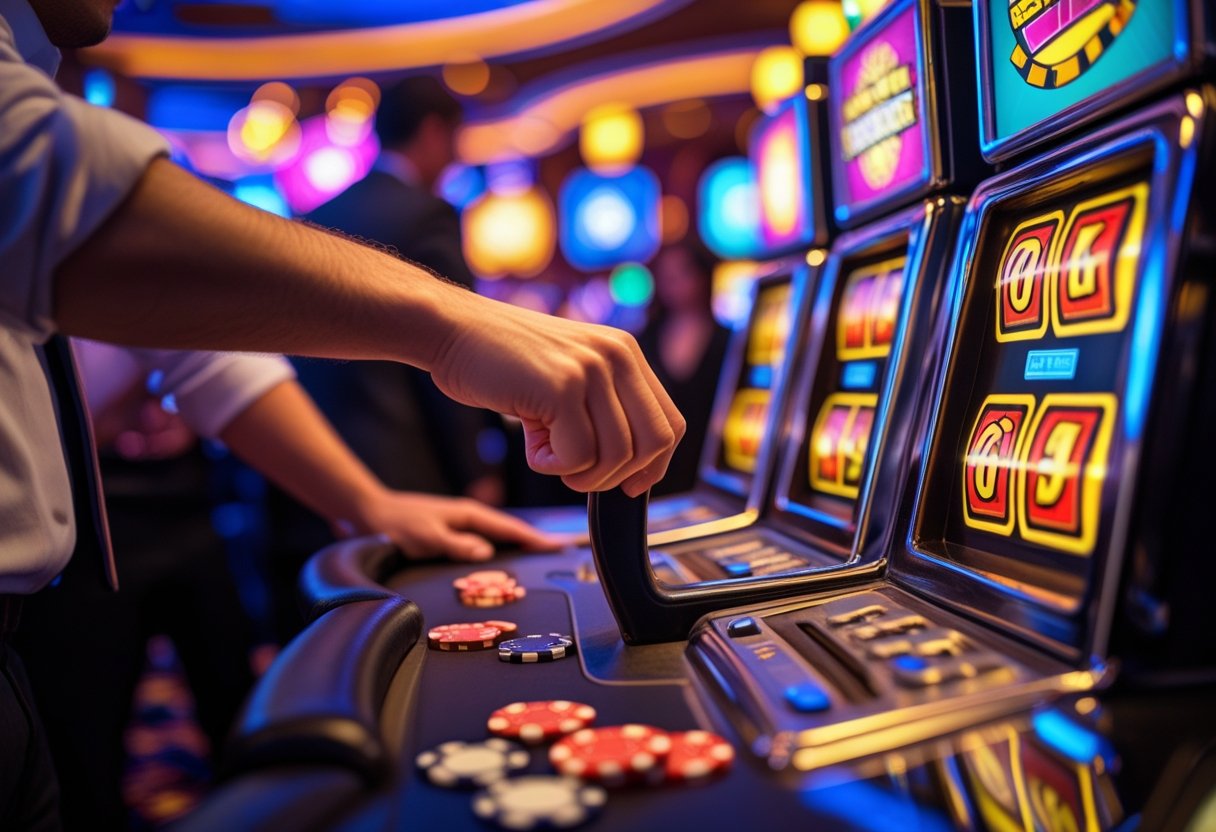
Casino games make players feel like they have more control than they actually do. Slot machines let players press buttons or pull levers, creating a sense of agency over random outcomes. This perceived control keeps people engaged even though the results are predetermined by random number generators.
Players often develop personal rituals or strategies they believe influence their chances. They might pick specific machines, press buttons in certain ways, or play at particular times. These behaviors have no actual effect on outcomes but reinforce the feeling that skill matters.
The illusion grows stronger when players experience occasional wins. They attribute successes to their actions rather than chance. This cognitive bias makes people overestimate their ability to predict or influence results.
Near Miss Effects
A near miss occurs when the outcome almost results in a win, such as two matching symbols with the third one space away. The brain processes near misses similarly to actual wins, triggering emotional responses that encourage continued play. These outcomes feel meaningful even though they have the same value as any other loss.
Slot machines are programmed to generate near misses at specific rates, typically around one in every twelve spins. These calculated outcomes create stronger emotional reactions than clear losses. Players interpret near misses as evidence they’re getting closer to winning, though each spin remains independent and random.
Intermittent Reinforcement Impact
Variable ratio schedules of reinforcement, where rewards come after unpredictable numbers of attempts, create the strongest behavioral patterns. B.F. Skinner’s research demonstrated that behaviors reinforced on variable schedules persist longer than those rewarded consistently. Casino games operate primarily on these schedules, delivering wins at random intervals.
This reinforcement pattern makes gambling behavior highly resistant to extinction. Players continue even during long losing streaks because the next win could happen at any moment. The unpredictability prevents players from recognizing patterns that would help them stop.
Small wins and bonus features function as intermediate rewards that maintain engagement between larger payouts. These frequent small reinforcements keep the behavior active even when overall losses mount.
Design Strategies Leveraging Variable Rewards
Casinos build their games around unpredictable reward patterns that keep players engaged longer than fixed rewards would. These strategies appear in everything from the spinning reels of slot machines to the dealt cards at blackjack tables.
Slot Machines and Randomized Payouts
Slot machines use random number generators to create unpredictable winning patterns. Each spin operates independently, with no connection to previous results. This randomness means players never know when the next payout will arrive.
Modern slot machines include multiple reward types beyond basic payouts. Bonus rounds appear at irregular intervals and offer additional winning chances. Free spins trigger randomly during regular gameplay. Multipliers increase winnings by surprise amounts, from 2x to 100x or more.
The machines display near-misses where symbols almost line up for big wins. These close calls activate similar brain responses as actual wins. Players often continue playing after these near-misses because they feel the jackpot is within reach.
Reward Structures in Table Games
Table games like blackjack and roulette deliver variable rewards through natural game mechanics. Each hand or spin produces different outcomes based on chance and player decisions. The payout amounts vary by bet type, ranging from even money to 35-to-1 odds.
Progressive side bets add extra variable reward layers to traditional table games. These optional wagers offer large jackpots that grow over time and pay out randomly. Poker variations include royal flush bonuses that appear infrequently but deliver substantial rewards.
Dealers and game pace create additional uncertainty elements. Live games introduce human variability that automated versions cannot replicate.
Player Retention Techniques
Casinos use loyalty programs that reward play with points redeemable for cash, meals, or hotel stays. The earning rates and redemption values vary by game type and player status. Higher-tier members receive surprise upgrades and exclusive offers at unpredictable times.
Mystery promotions appear without warning throughout gaming floors. Players might receive random bonus credits, free play vouchers, or drawing entries. These unexpected rewards encourage return visits.
Casinos send personalized offers based on individual play patterns. One player might receive free slot play while another gets tournament entries. The timing and value of these offers changes to maintain interest and prevent players from predicting when rewards will arrive.
Societal and Behavioral Implications
Variable reward systems in casinos create measurable changes in how people gamble and interact with gaming environments. These psychological mechanisms affect individual behavior patterns and can lead to serious consequences for vulnerable populations.
Impact on Gambling Behavior
Variable rewards change the way players approach casino games by creating unpredictable patterns that maintain engagement. Players stay at slot machines and table games longer when they cannot predict when the next win will occur. This unpredictability activates reward-seeking behavior in the brain.
The lack of a consistent pattern makes it difficult for players to recognize when they should stop. Research shows that variable reward schedules are more effective at maintaining behavior than fixed schedules once a habit forms. Players often continue gambling even after multiple losses because the next spin or hand could bring a win.
Casino environments amplify these effects through sound, lights, and near-miss outcomes. When a slot machine shows two matching symbols with the third just one position away, it creates the feeling of almost winning. This near-miss phenomenon encourages continued play even though it represents a loss.
Development of Habitual Play
Repeated exposure to variable rewards builds habits that become difficult to break over time. The brain learns to associate casino environments with potential rewards, creating automatic responses that drive repeated visits. These habits form because unpredictable rewards strengthen neural pathways more effectively than predictable ones.
Players develop routines around their gambling activities without conscious awareness. They may visit casinos on specific days, play certain machines, or follow particular betting patterns. The variable reward structure reinforces these routines by occasionally providing wins that feel meaningful.
Common habitual patterns include:
- Regular weekly or daily casino visits
- Extended playing sessions that exceed planned time limits
- Automatic responses to casino-related cues like advertisements or nearby locations
- Difficulty stopping play even when experiencing losses
The transition from casual to habitual gambling often happens gradually as the brain adapts to the reward patterns.
Potential for Problem Gambling
Variable reward schedules contribute to the development of gambling problems in susceptible individuals. Approximately 1-2% of adults experience severe gambling problems, with higher rates among regular casino visitors. The unpredictable nature of wins makes it harder for people to recognize problematic patterns in their behavior.
Problem gambling develops when individuals lose control over their gambling activities despite negative consequences. Financial difficulties, relationship problems, and mental health issues often accompany problematic gambling behavior. The same psychological mechanisms that make variable rewards engaging also make them potentially harmful.
Warning signs of problem gambling:
- Gambling with money needed for essential expenses
- Borrowing money to continue gambling
- Lying to family members about gambling activities
- Feeling distressed or anxious when unable to gamble
- Chasing losses by gambling more to recover money
Young adults and individuals with pre-existing mental health conditions face higher risks for developing gambling problems when exposed to variable reward systems.