
Virtual reality online casinos are transforming the gambling industry by creating digital casino environments that players can enter using VR headsets. These platforms use advanced technology to simulate real casino floors with 3D graphics, realistic sounds, and interactive gameplay that goes far beyond traditional online gambling sites.
VR casinos allow players to walk around virtual casino floors, interact with dealers and other players, and play games in fully immersive 3D environments from their own homes. Players can sit at poker tables, pull slot machine handles, and even chat with other gamblers as if they were in a physical casino. The technology tracks player movements and creates a social gaming experience that bridges the gap between online and land-based casinos.
The VR casino market is growing rapidly as more players discover these immersive gaming platforms. Understanding how VR technology enhances casino games, which sites offer the best experiences, and what safety measures protect players helps gamblers make informed decisions about this exciting new form of online entertainment.
What Are Virtual Reality Online Casinos?
Virtual reality casinos use special technology to create 3D gaming environments that feel like real casinos. These platforms combine VR headsets with gaming software to let players walk around virtual casino floors and interact with games in new ways.
Definition of Virtual Reality Casinos
A virtual reality casino is an online gambling platform that uses VR technology to create immersive 3D environments. Players wear VR headsets to enter digital casino spaces that look and feel like real gambling venues.
These casinos allow players to move around virtual casino floors freely. They can sit at poker tables, walk up to slot machines, and interact with other players and dealers in real-time.
Key features include:
- 3D casino environments players can explore
- Real-time interaction with other players
- Virtual dealers and gaming tables
- Hand gesture controls for placing bets
- Spatial audio that changes based on location
Players use hand controllers to pick up chips, pull slot machine handles, and make betting decisions. The experience mimics being in a physical casino without leaving home.
Key Technologies Behind VR Online Gambling
VR casinos rely on several important technologies working together. The most crucial component is the VR headset, which displays the 3D casino environment and tracks head movements.
Motion tracking systems monitor player movements and hand gestures. This lets players reach out to touch cards, grab chips, or pull slot machine levers naturally.
3D graphics engines create realistic casino environments with detailed textures and lighting. These systems render everything from casino carpets to spinning roulette wheels in real-time.
Spatial audio technology adds realistic sound effects that change based on where players are located. Slot machine sounds get louder when players walk closer to them.
Network infrastructure handles multiplayer interactions and connects players to live dealers. This technology ensures smooth gameplay even when multiple players interact simultaneously.
Compatible VR headsets include:
- Meta Quest 2 and 3
- HTC Vive
- PlayStation VR
- Valve Index

Differences Between VR Casinos and Traditional Online Casinos
Traditional online casinos display games on flat computer screens or mobile devices. Players click buttons or tap screens to make betting decisions and watch 2D animations.
VR casinos create full 3D environments where players can move around and interact naturally. Instead of clicking a bet button, players physically place chips on tables using hand gestures.
Social interaction differs significantly between the two formats. Traditional online casinos may have chat boxes for communication. VR casinos let players talk face-to-face with avatars and use body language.
Game variety is currently limited in VR casinos compared to traditional platforms. Most VR casinos focus on poker, blackjack, roulette, and slots. Traditional online casinos offer hundreds of game variations.
Equipment requirements create another major difference. Traditional online casinos work on any device with internet access. VR casinos require expensive headsets and powerful computers to run properly.
Immersion levels vary greatly between formats. Traditional casinos rely on graphics and sound effects on screens. VR casinos make players feel physically present in casino spaces.
How Virtual Reality Enhances Online Casino Experiences
Virtual reality technology transforms online gambling through three-dimensional environments that replicate physical casinos. Players can interact with games, dealers, and other players in real-time using VR headsets and controllers.
Immersive Gameplay and Interactivity
VR casinos allow players to move around virtual casino floors using hand gestures and body movements. Players can pick up poker chips, pull slot machine levers, and throw dice using natural motions.
The technology tracks head and hand movements to create realistic interactions. When players look around, they see detailed casino environments from different angles. Hand controllers let them reach out and touch game elements.
Key Interactive Features:
- Physical chip handling and card dealing
- Voice chat with other players
- Gesture-based game controls
- Walking between different gaming tables
Players wear VR headsets that display 360-degree casino environments. The headsets respond to head movements, making players feel like they are actually inside the casino. This creates a much stronger connection to the games than traditional screen-based online casinos.
Realistic Casino Environments
VR casinos recreate famous casino locations with detailed graphics and sound effects. Players can walk through virtual versions of Las Vegas casinos or luxurious Monte Carlo gaming halls.
The environments include realistic lighting, background music, and ambient sounds. Players hear slot machines ringing, cards shuffling, and other players talking. Visual details include ornate decorations, carpet patterns, and ceiling designs found in real casinos.
Environmental Elements:
- Accurate casino floor layouts
- Realistic lighting and shadows
- Background casino sounds
- Detailed furniture and decorations
Some VR casinos model their environments after actual famous casinos. Others create fantasy casino settings with unique themes and designs. The graphics quality continues to improve as VR technology advances.

Live Dealer Integration in VR Casinos
VR technology combines with live dealer games to create hybrid experiences. Real dealers appear as video feeds within the virtual casino environment. Players can see and talk to actual human dealers while sitting at virtual gaming tables.
The dealers interact with players through voice communication and hand gestures. Players can ask questions and receive responses just like in physical casinos. This adds human connection to the digital gambling experience.
VR live dealer games include blackjack, roulette, baccarat, and poker. The dealers work from professional studios with multiple cameras. These cameras capture different angles that translate into the VR environment.
Players can observe dealer movements up close and watch cards being dealt in real-time. The combination of virtual environments and real dealers bridges the gap between online and land-based casino experiences.
Popular Games Available in VR Online Casinos
VR casinos offer immersive versions of traditional casino games using 3D technology and realistic graphics. Slot machines dominate the VR gaming space, while poker rooms and table games provide social interaction with other players.
Virtual Reality Slot Machines
VR slot machines are the most popular games in virtual casinos. Players can walk around 3D casino floors and choose from hundreds of different slot games.
These games feature realistic sound effects and visual animations. The reels spin in front of players as if they were standing at a real machine in Las Vegas.
Many VR slots include bonus rounds that transport players to different virtual worlds. Players might explore ancient temples or underwater cities during special features.
Popular VR slot features include:
- 360-degree gaming environments
- Interactive bonus games
- Realistic spinning mechanics
- Multiple betting options
- Progressive jackpots
SlotsMillion VR offers one of the largest collections of virtual reality slot games. Players can customize their avatars and move freely around the virtual casino floor.
VR Poker Rooms
VR poker creates realistic multiplayer experiences where players sit at virtual tables with others from around the world. Players can read body language and interact through voice chat.
PokerStars VR leads the virtual poker market. Players can throw objects, use hand gestures, and even order virtual drinks during games.
Key VR poker features:
- Real-time voice communication
- Avatar customization options
- Multiple table types and stakes
- Realistic card dealing animations
- Social interaction tools
Players can participate in tournaments or casual cash games. The technology tracks hand movements and facial expressions to create authentic poker experiences.
VR Roulette and Table Games
VR roulette wheels spin with realistic physics while players place chips on virtual betting tables. Dealers interact with players through voice and visual cues.
Available VR table games include:
- European and American roulette
- Blackjack with live dealers
- Baccarat tables
- Craps with dice throwing
- Casino War
Players can walk around roulette tables to view the action from different angles. Blackjack games feature realistic card shuffling and dealing motions.
Casino VR provides multiple table game options with customizable betting limits. Players can chat with dealers and other participants during gameplay.
Benefits of Playing at VR Online Casinos
VR casinos provide real-time social connections with other players and dealers through immersive 3D environments. Players can personalize their gaming experience with custom avatars and virtual spaces while enjoying heightened engagement through interactive gameplay.
Enhanced Social Interaction
VR casinos recreate the social atmosphere of physical casinos through advanced technology. Players can communicate with dealers and other gamblers using voice chat and body language through their avatars.
The technology allows players to sit at virtual tables with real people from around the world. They can see facial expressions, hand gestures, and reactions in real-time. This creates authentic social connections that traditional online casinos cannot match.
Key social features include:
- Live voice communication with other players
- Real-time avatar interactions and gestures
- Virtual table seating with multiple participants
- Shared gaming experiences in 3D spaces
Players often form friendships and gaming groups within VR casino environments. The immersive nature makes conversations feel natural and spontaneous, similar to meeting people at land-based casinos.
Customizable Avatars and Rooms
Players can create personalized avatars that represent them in the virtual casino world. These digital representations can be customized with different clothing, accessories, and physical features to match personal preferences.
VR casinos offer private gaming rooms where players can invite friends for exclusive sessions. These spaces can be decorated and arranged according to individual tastes and gaming needs.
Customization options typically include:
- Avatar appearance and clothing choices
- Private room themes and decorations
- Personalized gaming table settings
- Custom lighting and music preferences
The ability to express individuality through avatars enhances the personal connection to the gaming experience. Players feel more invested when their virtual presence reflects their personality and style.
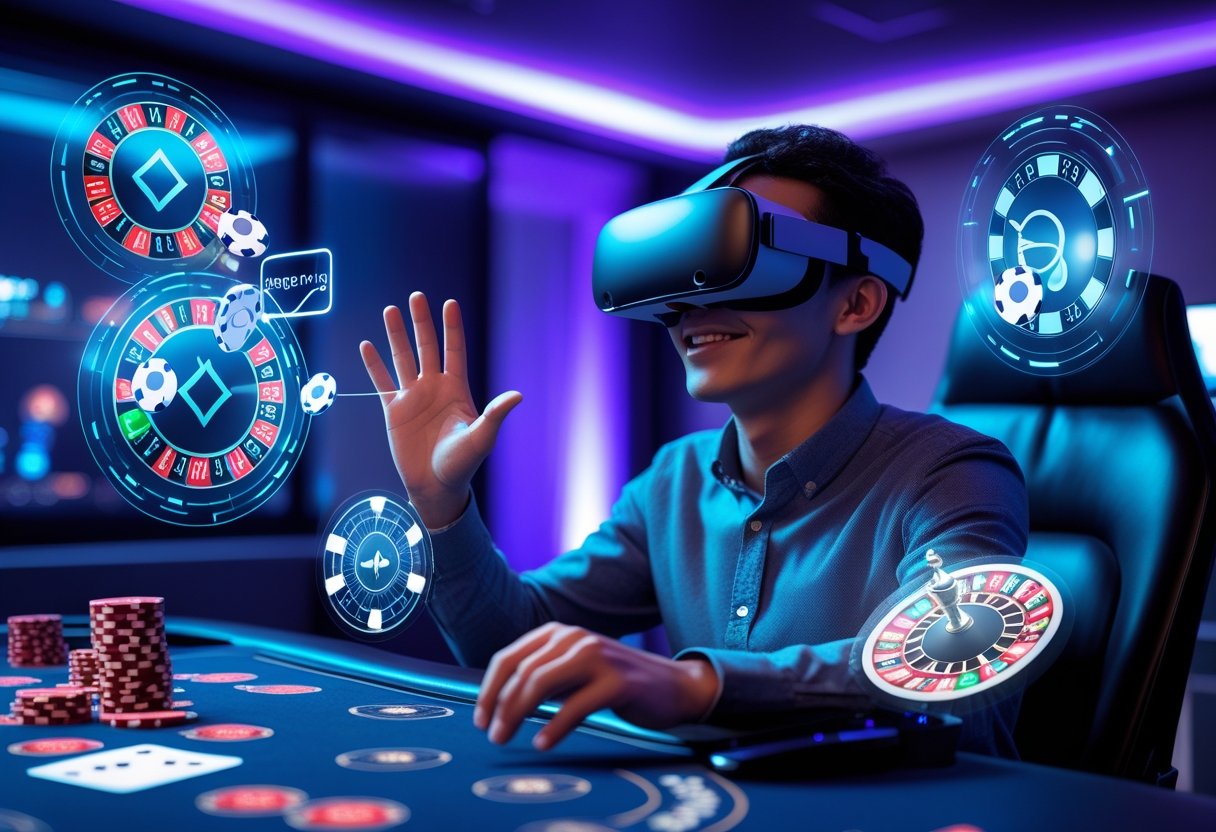
Greater Player Engagement
VR technology transforms passive online gambling into active, immersive experiences. Players physically move around virtual casino floors, pick up cards, and handle chips with hand controllers.
The 3D environment keeps players focused and entertained for longer periods. Interactive elements like slot machine levers and roulette wheels respond to natural hand movements, making gameplay feel realistic.
Engagement features include:
- Physical interaction with gaming equipment
- 360-degree casino floor exploration
- Realistic game mechanics and physics
- Immersive sound effects and visual details
The technology reduces distractions that commonly occur with traditional online gaming. Players become fully absorbed in the virtual environment, leading to more enjoyable and memorable gaming sessions.
Challenges Facing Virtual Reality Casinos
VR casinos face major barriers that slow their growth. High-cost equipment and technical problems limit who can play, while fewer game options reduce appeal.
Accessibility and Hardware Requirements
VR headsets remain expensive for most players. Quality headsets like the Meta Quest 3 cost $500 or more. PlayStation VR2 systems require a PlayStation 5 console, adding another $500.
Many players lack the technical skills to set up VR equipment. The process involves downloading software, calibrating headsets, and troubleshooting connection issues.
System requirements create additional barriers. VR casino games need powerful computers with fast processors and graphics cards. Older devices cannot run these games smoothly.
Motion sickness affects 25-40% of VR users. Players experience nausea, dizziness, and eye strain during longer gaming sessions. This limits how long people can play VR casino games.
Cost of Participation
The initial investment for VR gambling exceeds $1,000 for most players. This includes headsets, controllers, and computer upgrades.
Monthly costs add up quickly. High-speed internet plans cost $50-100 monthly to support VR streaming. Some VR casinos charge premium membership fees for full access.
Equipment replacement becomes necessary every 3-4 years. Technology advances make older headsets incompatible with new games.
VR games often cost more than traditional online casino games. Developers charge higher prices to recover the expensive development costs for 3D environments.
Limited Game Selection
Most VR casinos offer fewer than 20 games. Traditional online casinos provide hundreds of slot machines, table games, and specialty options.
Popular casino games like bingo, keno, and scratch cards rarely appear in VR versions. Players cannot find their favorite games in virtual reality format.
Live dealer games remain limited in VR. Few casinos offer VR blackjack or poker with real dealers. The technology cannot yet support smooth video streaming in virtual environments.
New game releases happen slowly. Developers need months to create each VR casino game compared to weeks for traditional online games.
Safety and Security in VR Online Gambling
Virtual reality gambling platforms face unique security challenges due to their immersive technology and data collection methods. Players need enhanced privacy protections and stronger game integrity measures compared to traditional online casinos.
Privacy Controls in Virtual Reality
VR casinos collect extensive personal data beyond typical gambling information. This includes biometric data such as eye movements, head positioning, and hand gestures. These platforms also track behavioral patterns and physical reactions during gameplay.
Players should verify that VR casino operators use end-to-end encryption for all data transmission. The platform must clearly explain what biometric information they collect and how long they store it.
Key privacy protections to look for:
- Data anonymization features
- Opt-out controls for biometric tracking
- Secure avatar creation systems
- Protected voice chat functions
Many VR platforms allow users to customize their privacy settings. Players can often disable certain tracking features or limit data sharing with third parties.
Regulatory compliance varies significantly between jurisdictions. Licensed operators must follow stricter data protection rules than offshore platforms.
Fair Play and Game Integrity
VR gambling platforms use Random Number Generators (RNGs) just like traditional online casinos. However, the immersive environment creates additional verification challenges for players.
Third-party auditing companies test VR casino software for fairness. These audits examine both the RNG systems and the virtual environment’s accuracy. Players should only use platforms that display current eCOGRA or similar certification badges.
Game integrity factors include:
- Verified RNG algorithms
- Independent software testing
- Real-time monitoring systems
- Transparent payout rates
The virtual dealer interactions must maintain the same randomness as live casino games. Some VR platforms use blockchain technology to provide transparent game records that players can verify independently.
Unregulated VR casino operators pose significant risks to player funds and personal security. These platforms often lack proper oversight and may manipulate game outcomes.
Industry Leaders and Software Providers
Several companies are leading the development of VR casino technology, creating platforms that bring traditional gambling into virtual worlds. Major software developers are building the tools and games that power these immersive experiences.
Notable VR Casino Platforms
SlotsMillion VR stands as one of the first dedicated VR casino platforms. Players can walk through a virtual casino lobby and interact with slot machines in 3D space.
Casino VR offers a comprehensive virtual gambling experience. The platform includes poker tables, blackjack, and roulette games in realistic casino environments.
PokerStars VR focuses specifically on poker gameplay. Players can sit at virtual tables, read body language, and use hand gestures to play cards.
These platforms use Oculus Rift, HTC Vive, and PlayStation VR headsets. Players need compatible VR equipment to access the full experience.
Most VR casinos currently operate in demo mode or with virtual currency. Real-money gambling in VR faces regulatory challenges in many regions.
Influential Developers in VR Gaming
NetEnt has created VR versions of popular slot games. Their Gonzo’s Quest VR brings the famous slot into virtual reality with 360-degree graphics.
Microgaming develops VR casino software for operators. They focus on creating realistic table games and immersive environments.
Evolution Gaming specializes in live dealer experiences. They are working to integrate VR technology with their existing live casino platforms.
Realistic Games builds VR slot machines and table games. Their software powers several virtual casino platforms.
These developers face technical challenges including motion sickness, graphics processing, and user interface design. They must balance visual quality with smooth performance across different VR headsets.
Future Trends in Virtual Reality Online Casinos
VR casino technology will advance through improved hardware and AI integration, while game libraries expand beyond traditional offerings to include social experiences and skill-based games. Regulatory frameworks are expected to develop specific guidelines for VR gambling environments.
Anticipated Technological Advancements
Hardware improvements will drive the next wave of VR casino innovation. Lighter headsets with higher resolution displays will reduce user fatigue during extended gaming sessions.
Wireless VR systems will eliminate cable restrictions. Players will move freely around virtual casino floors without technical limitations.
Haptic feedback technology will enhance the gambling experience. Users will feel the weight of poker chips and the texture of cards through specialized gloves and controllers.
Eye-tracking capabilities will enable more natural interactions with gaming interfaces. Players can select menu options and place bets simply by looking at specific areas.
AI integration will create personalized gaming environments. The system will adjust lighting, music, and game suggestions based on individual player preferences and behaviors.
5G connectivity will reduce latency issues that currently affect real-time multiplayer VR experiences. Faster data transmission will support more complex virtual environments with multiple simultaneous users.
Expansion of Game Libraries
VR casinos will move beyond traditional table games and slot machines. Social poker rooms will allow players to read body language and facial expressions through avatar systems.
Skill-based gaming will become more prominent in VR environments. Players will compete in virtual sports betting scenarios and interactive puzzle games that require physical movement.
Themed casino worlds will transport users to different time periods and locations. Ancient Rome casinos, futuristic space stations, and underwater gambling halls will offer unique atmospheres.
Live dealer integration will improve through mixed reality technology. Real dealers will appear alongside virtual elements, creating hybrid gaming experiences.
Tournament formats will utilize VR’s social capabilities. Large-scale poker tournaments and slot competitions will feature spectator modes and interactive viewing experiences.
Cross-platform compatibility will allow VR users to play alongside traditional online casino players in the same games.
Potential Regulatory Developments
Gambling authorities will establish VR-specific regulations to address unique challenges in virtual environments. These rules will cover identity verification methods and age confirmation processes.
Data privacy laws will expand to include biometric information collected by VR systems. Eye movement patterns and physical gestures will require special protection measures.
Responsible gambling tools will adapt to VR platforms. Time limits, spending controls, and reality check systems will integrate seamlessly into virtual casino environments.
Jurisdictional challenges will emerge as players access VR casinos from different locations. Clear guidelines will determine which laws apply when players cross virtual borders.
Technical standards for VR gambling software will be established. Certification processes will ensure fair gameplay and secure financial transactions in virtual environments.
Addiction prevention measures will incorporate VR-specific indicators. Regulators will monitor player behavior patterns unique to immersive gaming environments.
Tips for Choosing a VR Online Casino
Players should focus on graphics quality and user interface design when selecting a VR casino. Payment options and bonus structures also play a crucial role in the decision-making process.
Evaluating User Experience and Graphics
The graphics quality directly impacts the immersive experience in VR casinos. Players should look for platforms that offer high-resolution environments with detailed textures and smooth animations.
Frame rate stability is critical for comfortable VR gaming. Casinos should maintain at least 90 frames per second to prevent motion sickness and eye strain.
User interface design affects how easily players navigate the virtual environment. The best VR casinos feature:
- Intuitive menu systems
- Clear button layouts
- Easy-to-read text and numbers
- Responsive controls
Players should test the casino’s demo version if available. This helps determine if the graphics meet their standards before making deposits.
Cross-platform compatibility ensures the casino works well with different VR headsets. Look for platforms that support popular devices like Oculus Rift, HTC Vive, and PlayStation VR.
Payment Methods and Bonuses for VR Casinos
VR casinos should offer multiple secure payment options. Standard methods include credit cards, e-wallets, and bank transfers.
Cryptocurrency payments are becoming more common in VR casinos. Bitcoin and Ethereum provide faster transactions and enhanced privacy for players.
Withdrawal processing times vary between platforms. The best VR casinos process withdrawals within 24-48 hours.
Bonus structures in VR casinos often differ from traditional online casinos. Players should compare:
| Bonus Type | Typical Offer | VR Casino Advantage |
|---|---|---|
| Welcome Bonus | 100% match up to $500 | Enhanced with VR-exclusive games |
| Free Spins | 50-200 spins | Immersive slot experiences |
| Loyalty Rewards | Points system | Virtual achievements and items |
Players should read bonus terms carefully. VR-specific bonuses may have different wagering requirements than standard online casino promotions.
Frequently Asked Questions
Players often have specific questions about VR casino operations, compatibility requirements, and legal considerations. Understanding payout systems, headset compatibility, and game differences helps players make informed decisions about entering virtual reality gambling.
What are the top-rated virtual reality casinos currently available for players?
Several VR casinos have gained recognition for their immersive gaming platforms. SlotsMillion VR stands out as one of the first fully functional virtual reality casinos.
Casino VR and PokerStars VR offer comprehensive gaming experiences. These platforms feature realistic 3D environments that simulate physical casino settings.
Most top-rated VR casinos focus on slot machines and poker games. Players can walk through virtual casino floors and interact with gaming machines just like in real casinos.
Can you win real money at virtual reality casinos, and how does the payout process work?
Yes, players can win real money at licensed VR casinos. The payout process works the same way as traditional online casinos.
Players must create accounts and deposit real money to play for cash prizes. Winnings are credited to player accounts and can be withdrawn through standard banking methods.
Withdrawal options typically include bank transfers, e-wallets, and cryptocurrency. Processing times range from 24 hours to several business days depending on the chosen method.
What are the legal requirements for participating in virtual reality casinos in the United States?
VR casino legality varies by state in the United States. Players must be at least 21 years old in most jurisdictions that allow online gambling.
Only a few states currently permit real-money online casino gaming. New Jersey, Pennsylvania, Delaware, and Michigan have regulated online casino markets.
Players should verify their state’s specific laws before participating. Using offshore or unregulated VR casinos can create legal and financial risks.
Which virtual reality headsets are compatible with online casino gaming platforms?
Most VR casinos support popular headset models including Oculus Rift and HTC Vive. These headsets provide the immersive experience needed for virtual casino environments.
PlayStation VR works with some casino platforms but has limited compatibility. Newer headsets like Meta Quest 2 and Valve Index offer enhanced gaming experiences.
Players need compatible computers with sufficient processing power. VR casino gaming requires higher system specifications than traditional online casino games.
How do virtual reality slots compare to traditional online slots in terms of gaming experience?
VR slots create immersive 3D environments where players can physically pull levers and press buttons. Traditional online slots only require mouse clicks or screen taps.
Players can walk around virtual slot machines and examine them from different angles. This creates a more engaging experience similar to land-based casinos.
Game mechanics remain the same between VR and traditional slots. Random number generators determine outcomes regardless of the interface type.
VR slots often feature enhanced graphics and sound effects. The immersive technology makes bonus rounds and special features more exciting.
Are there any free virtual reality casino games that offer a realistic gaming experience for beginners?
Yes, several free VR casino games help beginners learn the technology. PokerStars VR offers free poker games with realistic social interaction.
Casino VR provides demo versions of popular games without real money wagering. Players can practice using VR controls and navigation before risking actual funds.
Many VR casinos offer free play modes alongside their real money games. These practice modes use the same graphics and mechanics as paid versions.
Free VR casino apps on gaming platforms let players explore virtual casino environments. These experiences help newcomers understand VR casino basics before playing for real money.